
 Bulgaria Work Permits | 10% Flat Tax & EU Gateway
Bulgaria offers the EU's lowest flat income and corporate tax rate at 10% — making it one of the most cost-effective countries in Europe for both employers and foreign workers to base their operations.
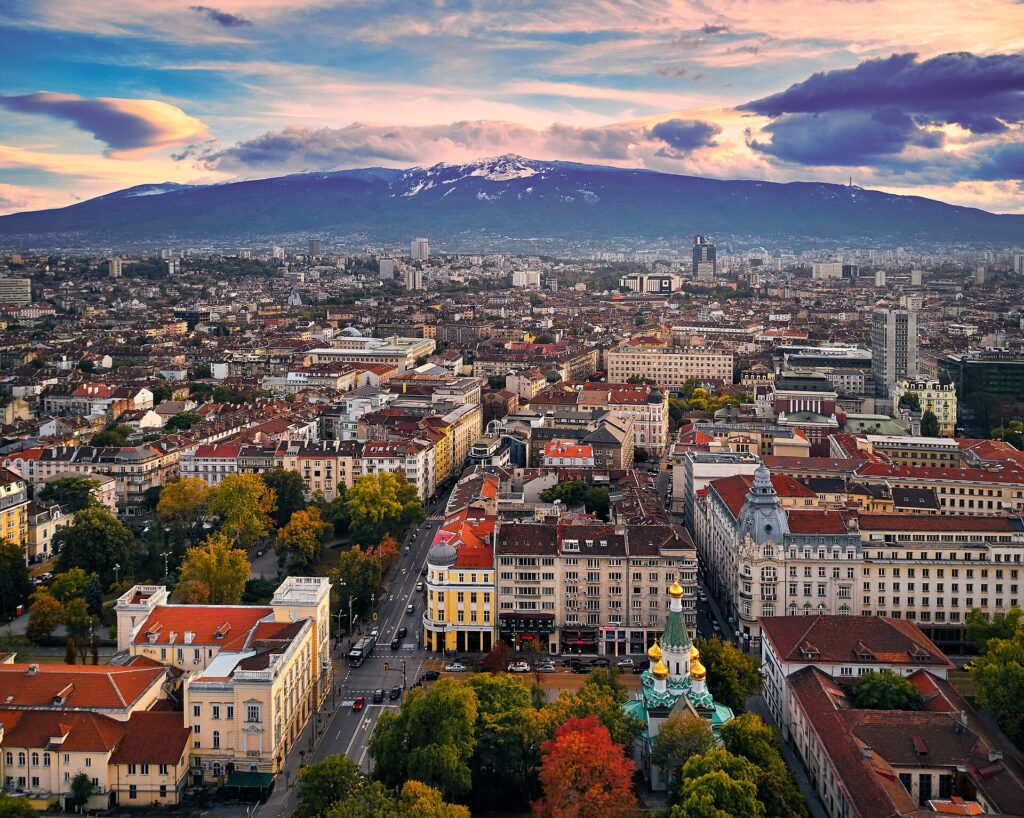
Bulgaria sits at the crossroads of Europe and Asia, offering an EU passport gateway with dramatically lower living and operating costs than Western Europe. Sofia is rapidly emerging as a tech hub with a growing outsourcing and software development sector. The country entered the Schengen area for air and sea travel in 2024.
Bulgaria applies a flat 10% personal income tax rate to all taxable income — one of the lowest in the EU. Corporate income tax is also 10%. This means foreign professionals keep significantly more of their salary compared to countries like Germany (45%) or France (49%).
Non-EU nationals working in Bulgaria require a Single Residence and Work Permit (SRWP) — a unified document issued through coordination between the Migration Directorate (Ministry of Interior) and the Bulgarian Employment Agency. The employer initiates the process, and the Agency verifies local labor market conditions before approval.
Bulgaria's EU Blue Card is valid for up to 4 years — longer than most EU countries — and is available to university-educated specialists meeting the statutory salary threshold. IT engineers, senior developers, and financial analysts are among the most common Blue Card applicants in Sofia.
Step 1: Employer files SRWP request with Migration Directorate.
Step 2: Employment Agency issues labor market opinion.
Step 3: Type D Visa issued at embassy; biometric residence card collected in Sofia.
Partially since 2024 — air and sea border checks are lifted. Full Schengen (land borders) is expected in the near future.
Combined Migration Directorate and Employment Agency processing takes approximately 45 to 60 days.
Yes. Once you hold a valid residence permit, you can apply for family reunification for your spouse and dependent children.